
Your First Guitar Lesson

My goal here is to give you what I consider to be the bare essentials needed to begin playing the guitar. First, let me give you a brief description of the instrument.
You might have an electric guitar, a steel-string guitar, or a nylon-string guitar. These are used for different playing styles, but they all share the same core physical characteristics. Most guitars have a headstock, a neck (which contains the fretboard), and a body, with six strings running between these three sections.
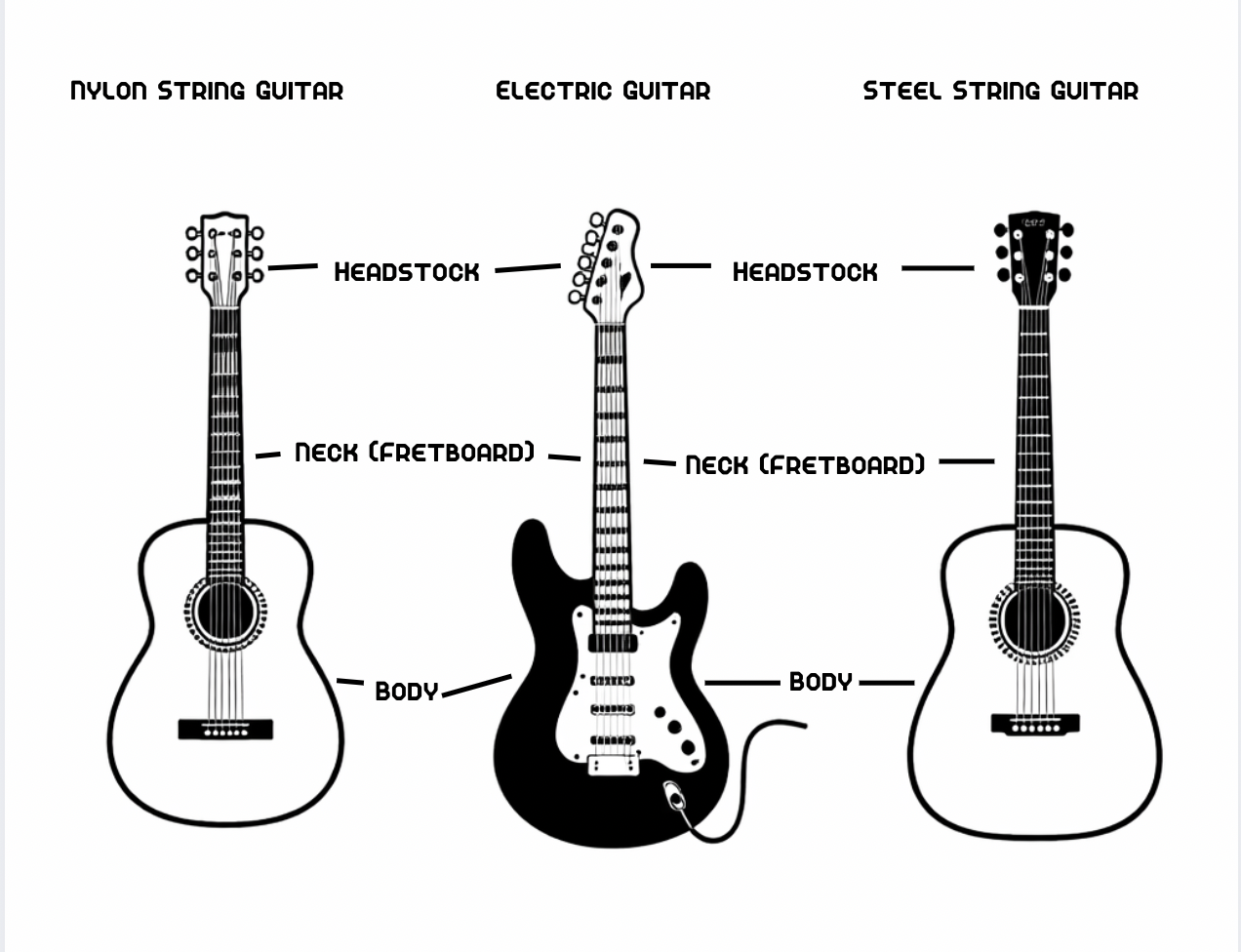
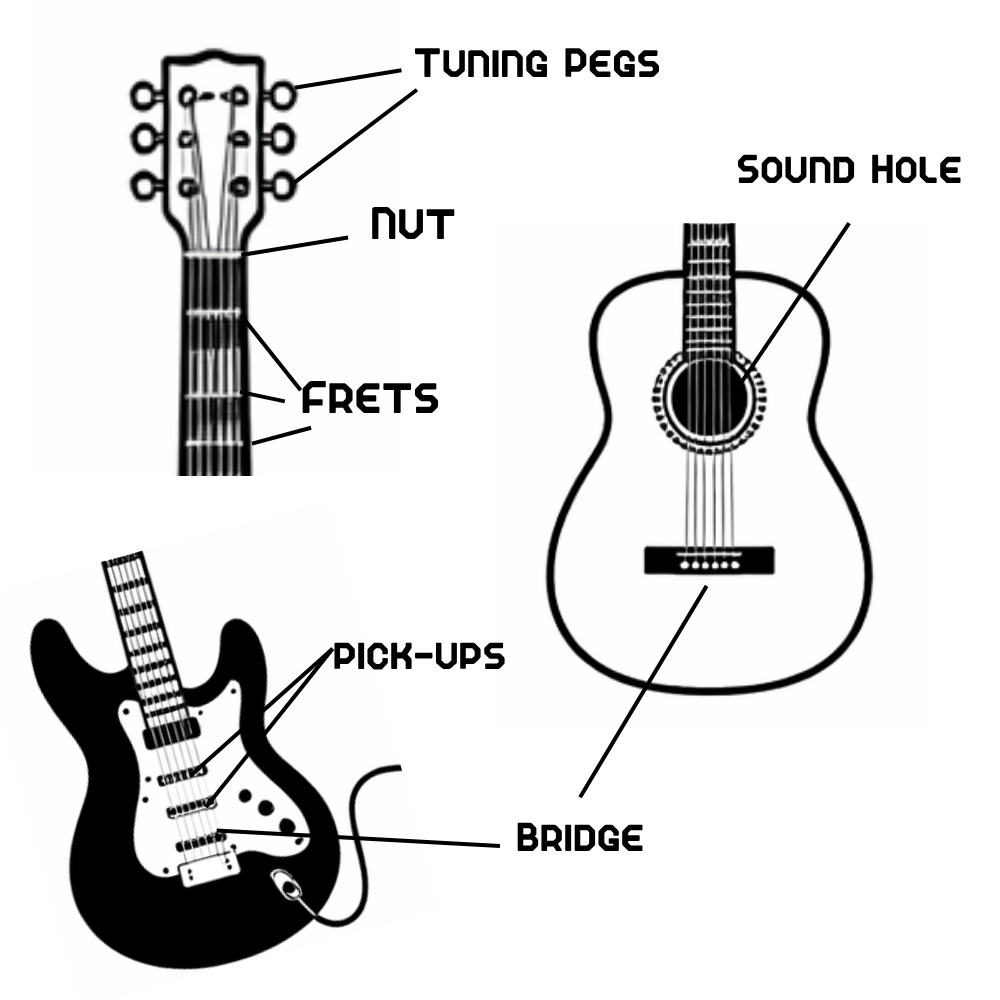
The headstock typically holds the tuning pegs, which allow you to adjust the strings to the desired pitch. The nut separates the headstock from the neck and is one of the two points where the strings rest. On the body, you will find either a sound hole (in the case of a steel-string or nylon-string guitar) or a pickup—or a set of pickups—in the case of an electric guitar. The second point where the strings rest is also located on the body and is called the bridge.
Holding the Guitar
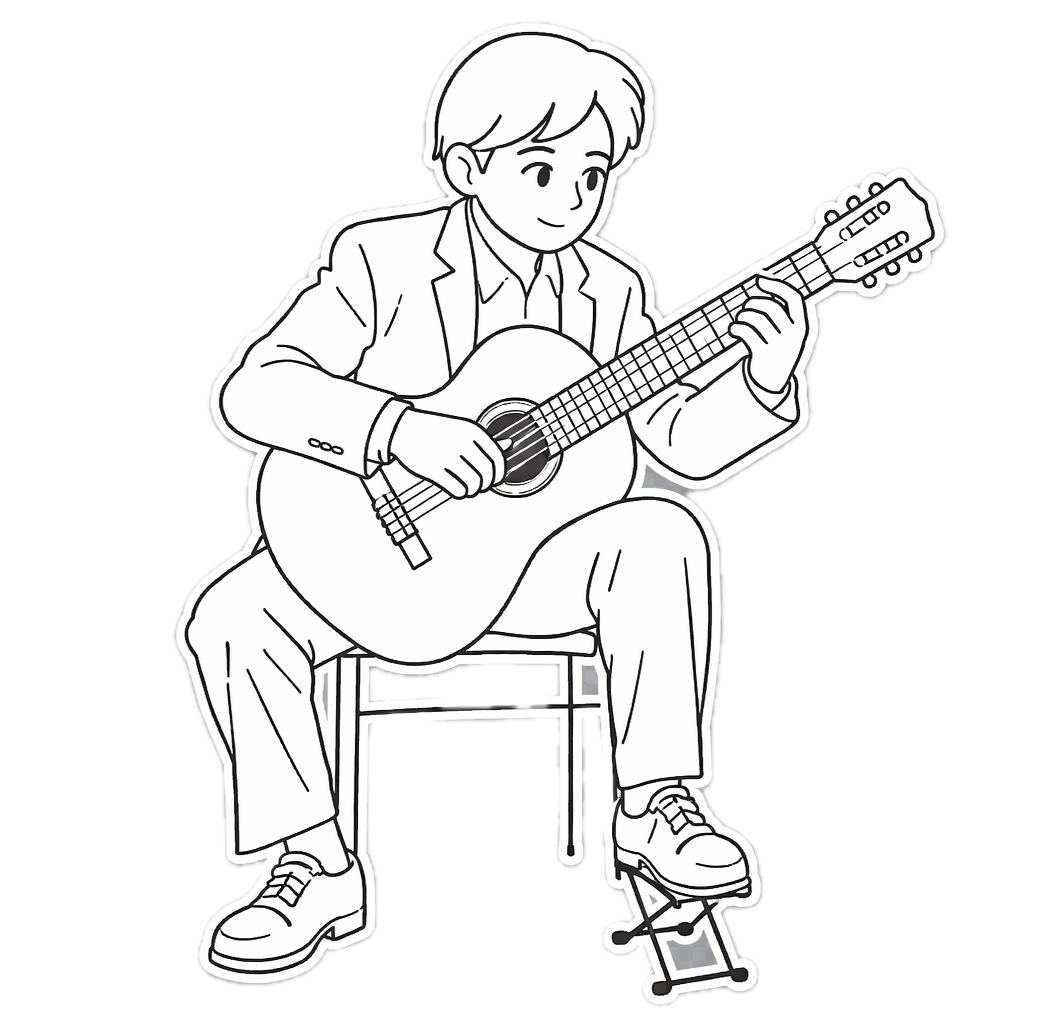
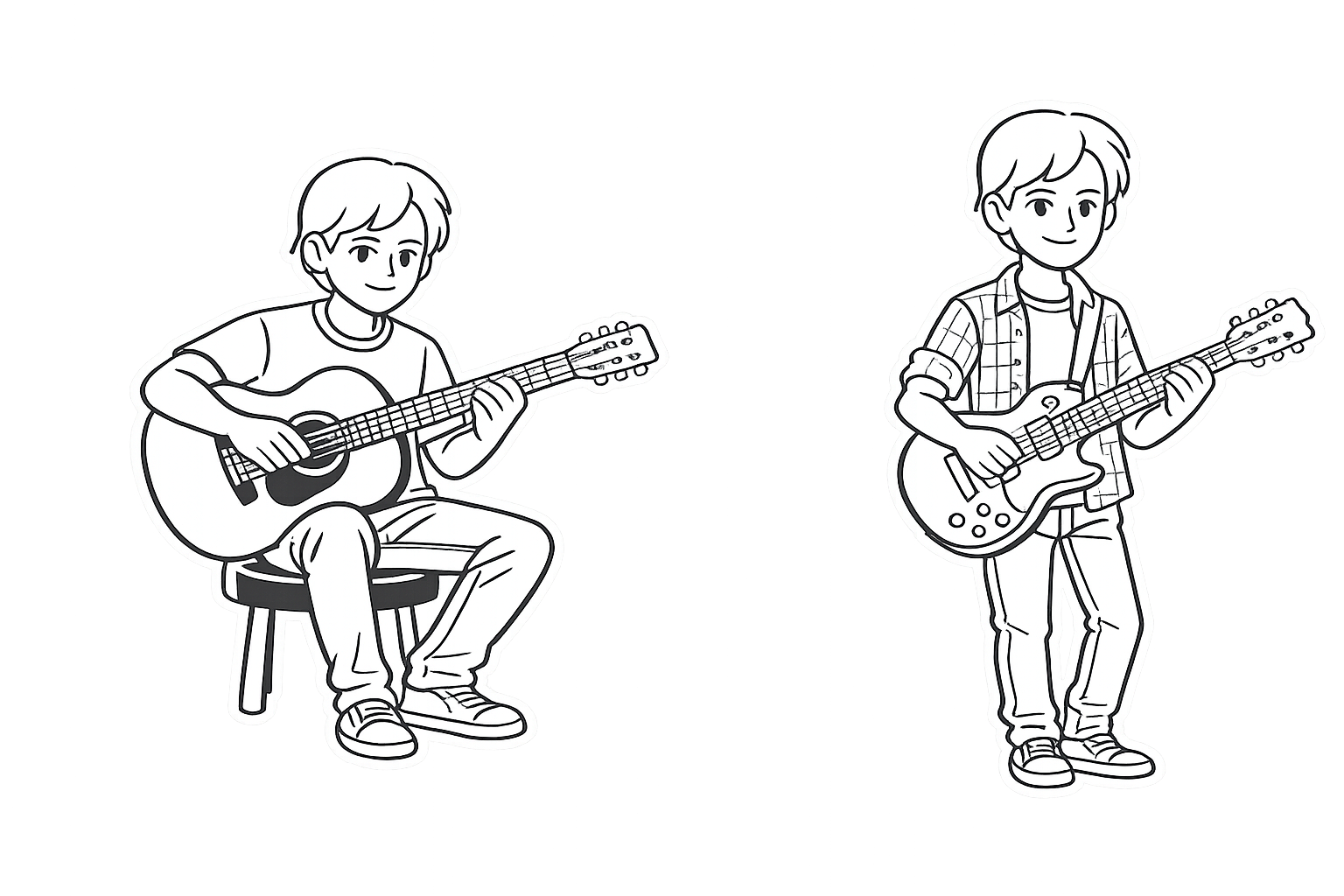
The proper way of holding the guitar depends on what kind of guitar you own and what style of music you play. This is a deeply personal matter because we all have different bodies. With that said, there are a few good rules of thumb to keep in mind.
Your left hand needs to have the freedom to move up and down the fretboard, so make sure you are not holding the guitar up with your left hand. Your right hand should also be free to move across the strings at any given moment. Keep your fingers loose and off the body of the guitar.
The neck of the guitar should be angled slightly upward, and your wrists should be relaxed with a natural curve—similar to how your arms hang naturally when you are standing upright and relaxed.
If you are sitting down, you can rest the guitar on either leg, with the back of the guitar resting against your torso and your right arm wrapped comfortably around the body of the instrument. If you are standing and using a strap, make sure the neck of the guitar still angles slightly upward. Your wrists should not be excessively bent, but should maintain a natural curve.
Below are a few diagrams showing different ways to hold the guitar:
Three Sets of Numbers You Need to Know to Start Playing Guitar
There are three sets of numbers you must learn to start playing the guitar.
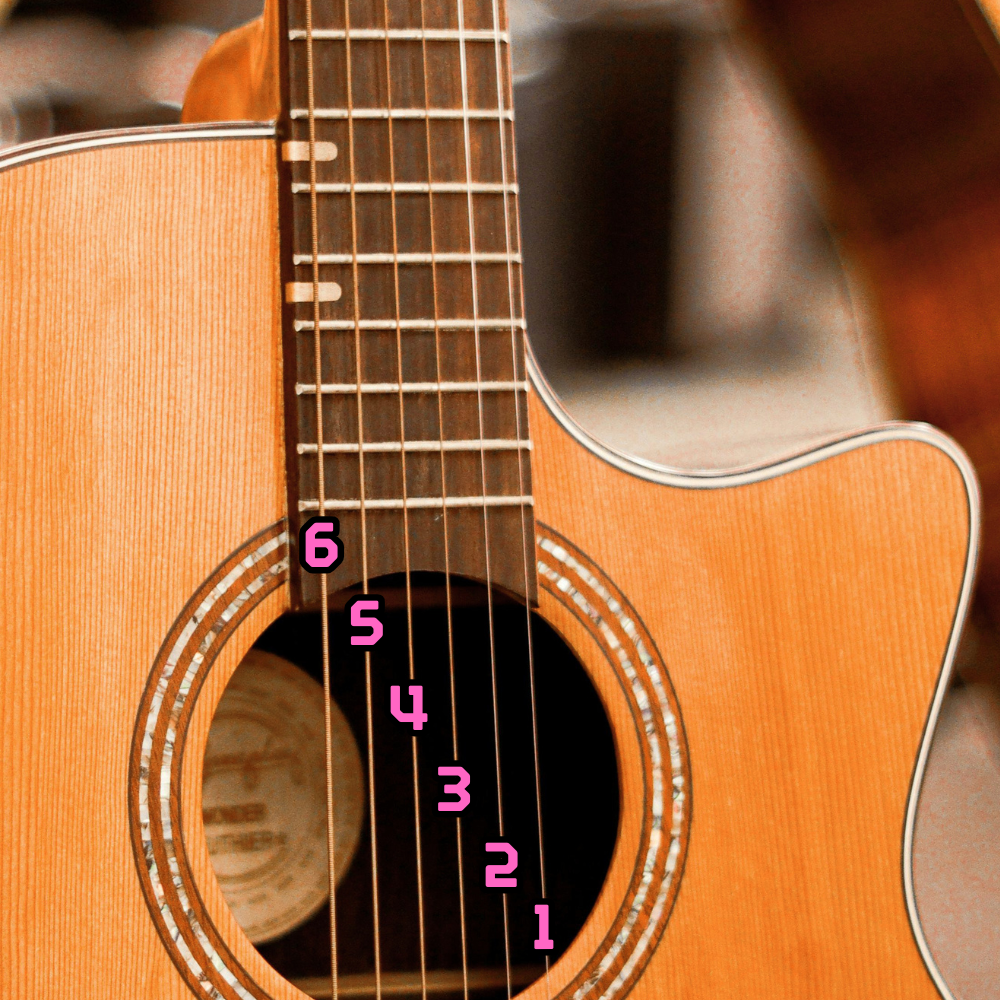
The first set is the guitar strings. You count them from bottom to top, or from thinnest to thickest.
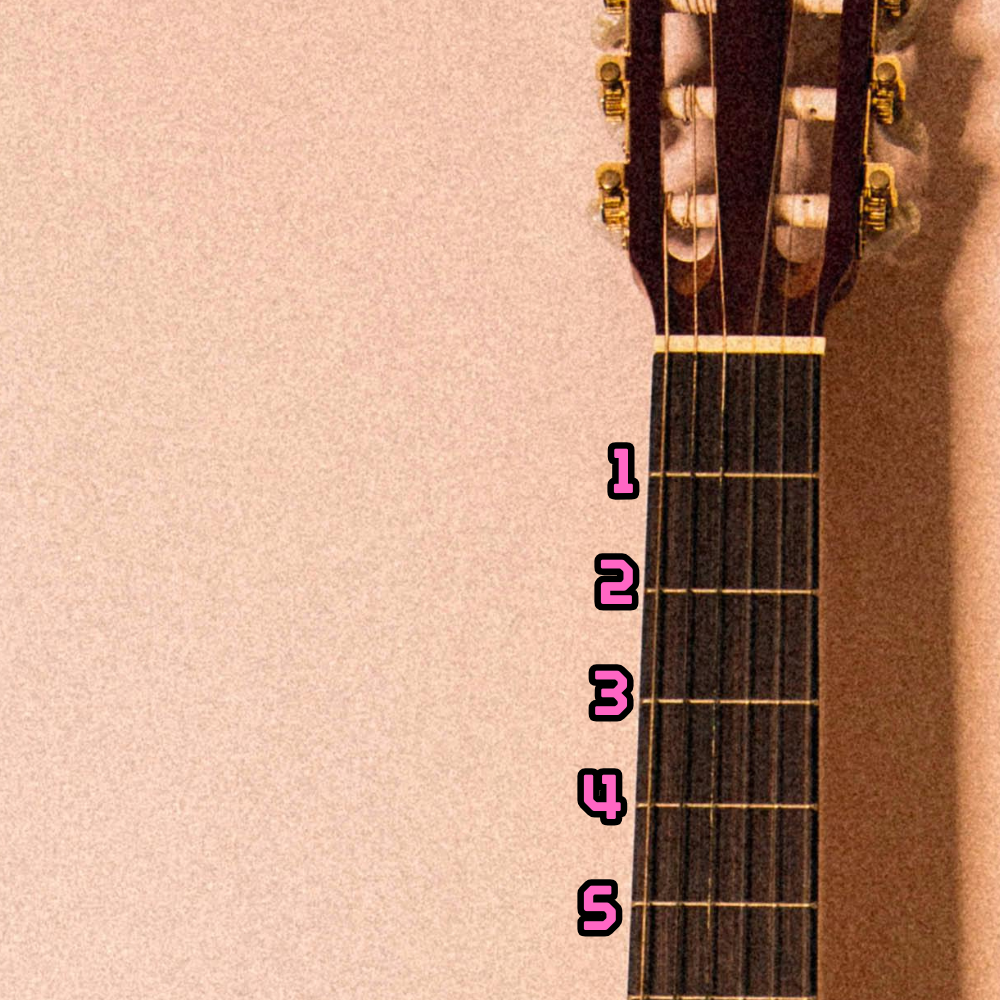
The second set is your guitar’s frets. Frets are the horizontal lines that run across the fretboard. You count them from the neck toward the bridge of the guitar.
The third and final set of numbers is your left-hand fingers.
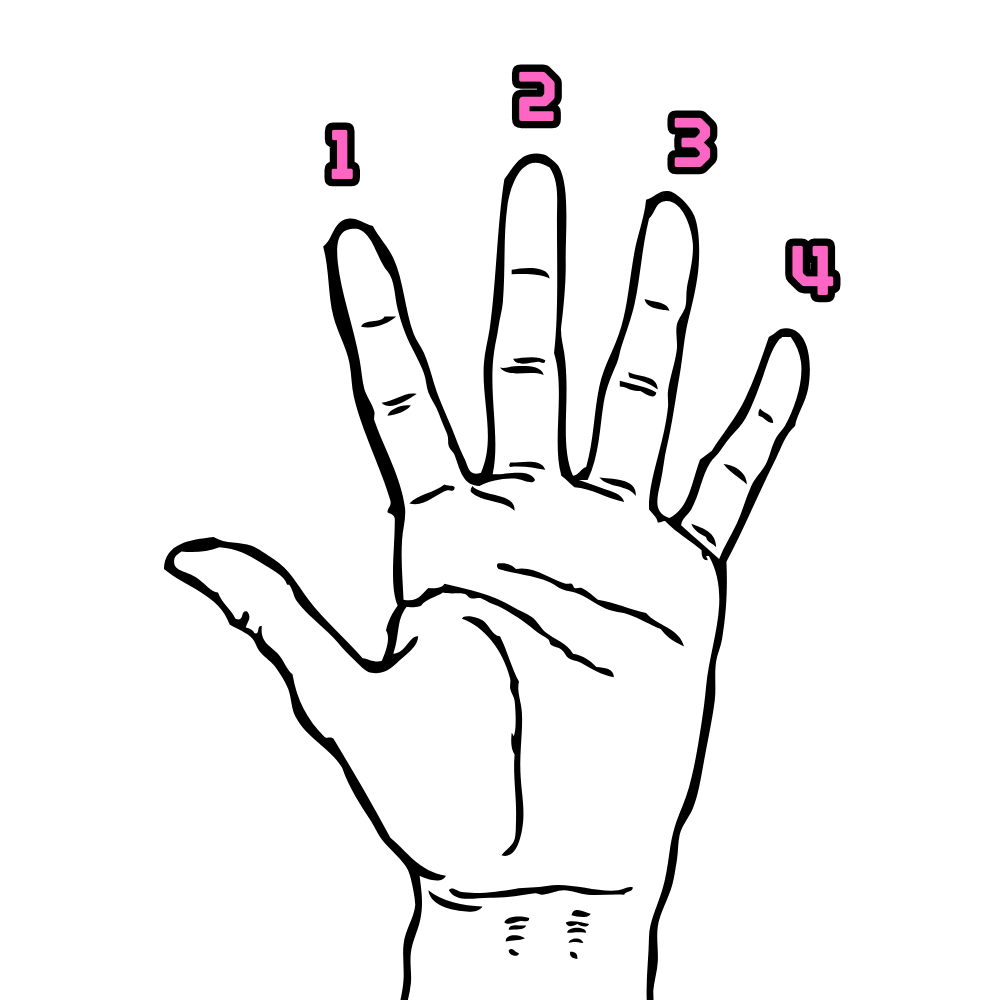
If you know these three sets of numbers, you can start playing right away. For example, try playing the note G using string 1, fret 3, finger 3. Now try playing a D using string 5, fret 5, finger 4.
In reality, all you need to know are the string and fret numbers, but you want to start thinking about fingering early on. This will be very helpful when it comes to playing chords and melodic phrases.
Playing a Couple of Simple Tunes
Try playing these frets on the first string, using any finger you want. Pluck only the first string as you play. You should be able to hear Twinkle Twinkle Little Star:
0 0 7 7 9 9 7
5 5 4 4 2 2 1
7 7 5 5 4 4 2
7 7 5 5 4 4 2
0 0 7 7 9 9 7
5 5 4 4 2 2 1
Now try this to play Mary Had a Little Lamb:
4 2 0 2 4 4 4 2 2 2 4 7 7
4 2 0 2 4 4 4 4 2 2 4 2 0
Conclusion
Now you know the very first things you need to start playing the guitar. You understand the basic anatomy of the instrument, how to hold it, and how to count the strings, frets, and your left-hand fingers. With this as your starting point, you now have a solid foundation to begin learning how to play the instrument.
— Carlos Rios
Founder, SPuR School of Music