
Strum, Pluck, Repeat

Knowing something in your mind is not the same as being able to do that thing accurately in reality. For example, understanding how to play a musical instrument in your mind is not the same as actually being able to play the instrument. In order to play a musical instrument, you must apply every piece of knowledge you gain through hard work and discipline.
The secret to learning music is knowing how to properly apply hard work and discipline. If you are just starting music—or if you have been playing for a while—you already know that the way to get better is to practice. They say “practice makes perfect,” but improper practice can make you frustrated and may even set you back. It can cause you to stop trying altogether.
I want all my students to have the proper mindset when they practice. Know that it’s okay to make mistakes, but it’s not okay to give up. In fact, making mistakes is necessary for learning. Making mistakes and learning from them is the engine behind the Strum, Pluck, Repeat method—and the secret to leaarning music.
Strum
For guitar players, one of the very first things you learn is how to play chords. You need to be able to understand chord charts like this one:
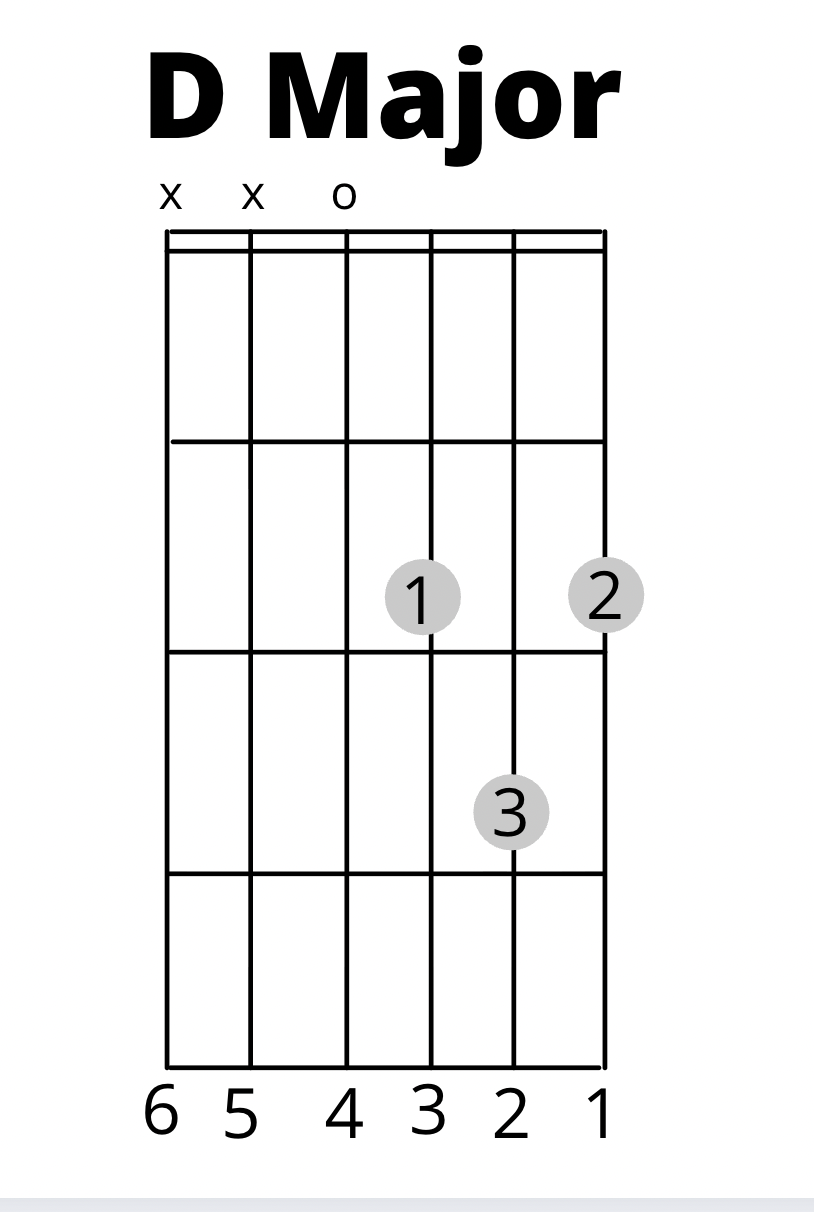
Once you understand how to read it, your first goal is to simply try to play it by strumming the chord. First, think carefully about what you are supposed to do, and then stop thinking and just go for it. Try it out. Likely it won’t be perfect, and it won’t sound great, but that is okay. You are applying newfound knowledge. The first step is simple: once you learn something new, just go for it and try to apply it.
Pluck
In all likelihood, your first attempt will fail—and that’s a good thing. Now you have an opportunity to improve. The most important thing to do at this stage is to pay attention. This is critical. Paying attention to your problems allows you to discover solutions.

When playing a chord, your goal is to make sure all the strings ring clearly. Plucking each string individually helps engage your senses of hearing, sight, and touch. Small adjustments to the angle of your fingers and wrist can make a big difference in the sound you produce.
Repeat
Now that you’ve applied your knowledge by strumming and paid attention to what went wrong, you get a chance to try again. Make sure you maintain all the fine adjustments you made before, and then strum the chord once more. Sometimes you will hear a remarkable difference. Sometimes it will sound worse. At other times, you may not be able to hear any difference at all.
What really matters is that you keep paying attention, learning from your mistakes, and trying again and again. Eventually, you will achieve a scorecard that looks something like this:

Conclusion
Becoming a better musician is always a game of trial and error. This is where the cycle and struggle of learning really begin to take effect. With each new iteration, there is improvement. Try, learn from your mistakes, and try again. That’s the secret.
It’s a simple idea, but you can apply it to all areas of learning. Every time you learn something new, that knowledge is a kind of power. For that power to be of any use, however, you must apply your newfound knowledge. Things likely won’t turn out perfect the first few times you try, but with practice, hard work, and discipline, you can achieve your goals.
— Carlos Rios
Founder, SPuR School of Music